
Yes, They Moved Fernandina Beach - Here’s Why | Notes from Amelia Island, Florida
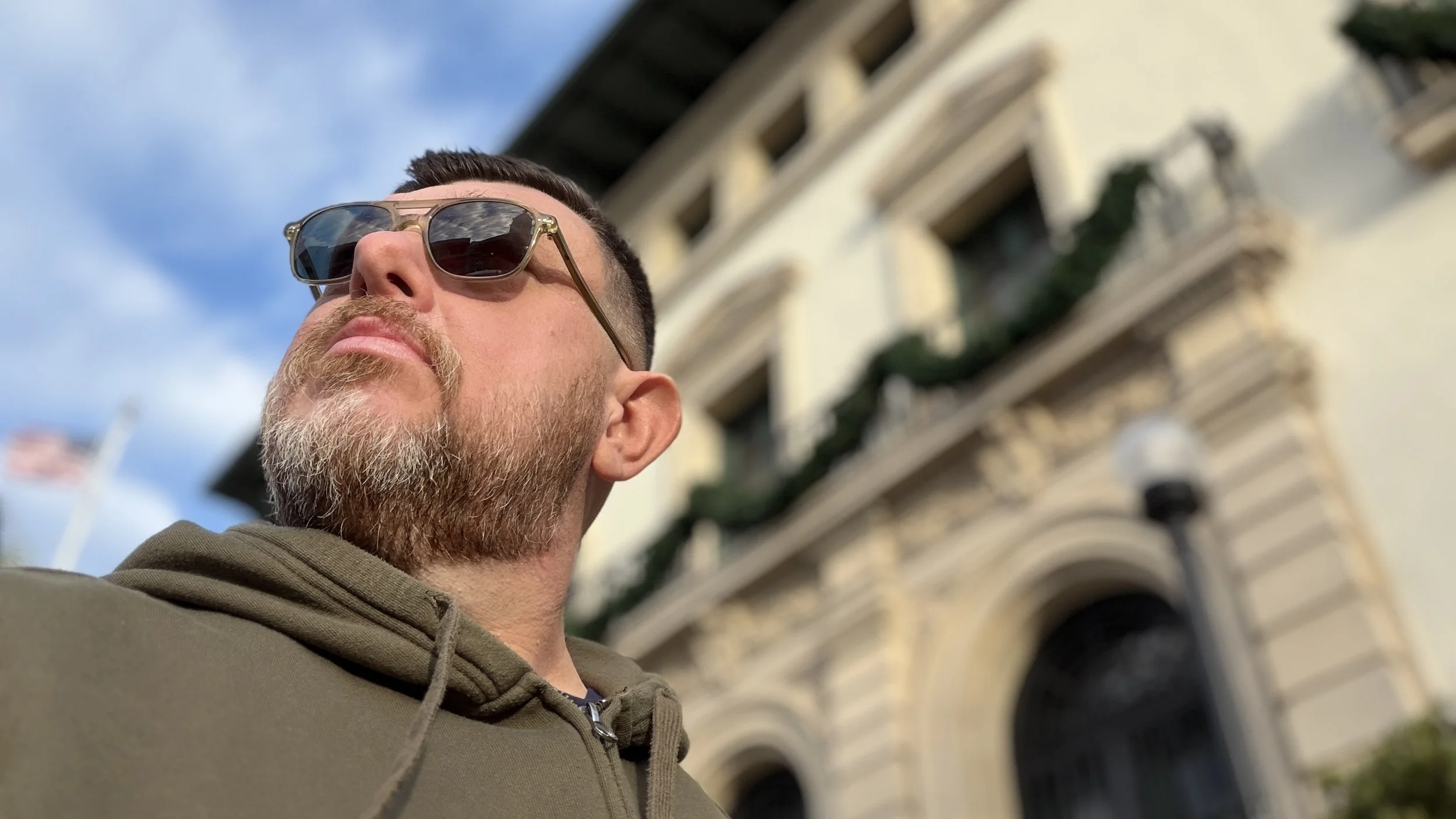
In this episode of the Gallivanter Podcast, we examine one of the most unusual decisions in Florida town planning.
Fernandina Beach did not simply expand over time. It relocated.
Before Centre Street became the commercial spine visitors recognize today, the original town stood farther north in what is now Old Town Fernandina.
Established during the Spanish period, the settlement faced the Amelia River, built for harbor control, trade, and defense. Its layout reflected maritime priorities, not tourism or rail commerce.
By the early nineteenth century, shifting channels, marsh constraints, and the growing importance of rail access forced a choice. Adapt the original site at great cost, or move.
Fernandina chose to move.
In this episode, we walk through the logic behind that decision, how the new grid was laid out, why Centre Street became central, and how Old Town transitioned into a quiet residential layer of history that still exists today.
Understanding this relocation explains why downtown Fernandina feels deliberate, why Old Town feels separate, and how railroads reshaped Amelia Island’s trajectory.
This is Episode Two of our four-part Amelia Island series.
Why the Railroad Skipped Fernandina | Notes from Amelia Island, Florida
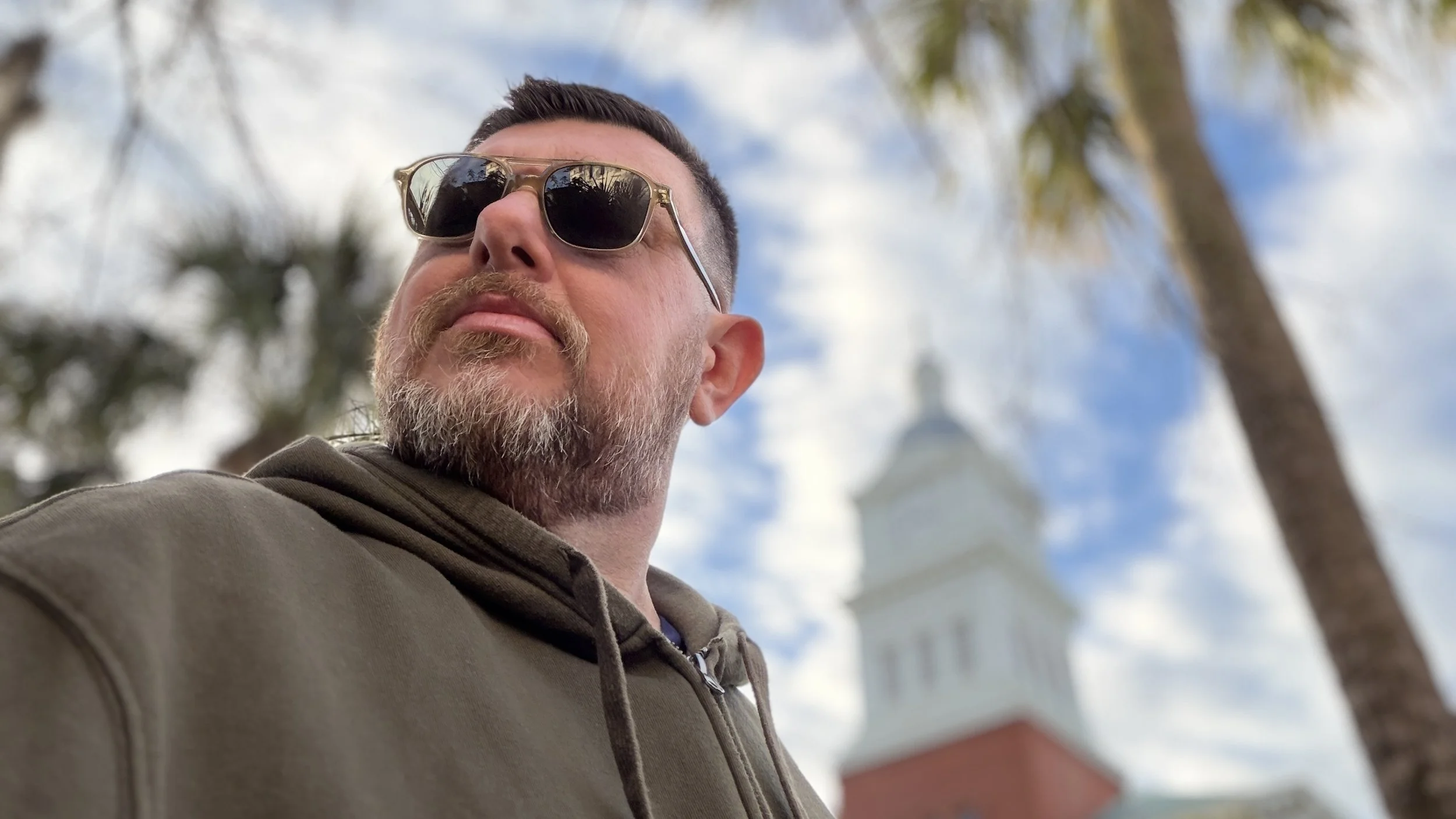
NOTES FROM AMELIA ISLAND is a four-part narrative series from The Gallivanter Podcast about how places become what they are, not through slogans or branding, but through a long chain of choices, accidents, and absences.
Amelia Island sits just off Florida’s northeast coast, close enough to the state’s major historical currents to have been swept up in them, yet curiously untouched by many of the forces that transformed the rest of Florida into something louder, faster, and more uniform.
This series looks at Amelia Island and Fernandina Beach the way a historian reads a landscape. Not as a postcard, but as a record.
Railroads that never arrived. Ports that should have boomed and didn’t. Industries that flared briefly and vanished. Preservation movements that succeeded when others failed. Small decisions that quietly compounded over decades.
Each episode traces a different layer of that story, moving between past and present, and using the modern island as evidence of what happened long before most visitors ever set foot here.
Episode 1: The Island the Railroad Passed By
The first episode begins with a simple observation. Amelia Island never became a railroad hub. Not because it lacked potential. Not because people didn’t try. But because, at several critical moments in the nineteenth and early twentieth centuries, powerful rail interests chose to build elsewhere.
Those decisions redirected capital, labor, and population toward other Florida ports and interior cities, and left Amelia Island on a parallel track. Close to growth, but never at its center.
Episode One examines Fernandina’s early promise as a deep-water port, the competing railroad schemes that surrounded it, Henry Flagler’s expansion strategy along Florida’s east coast, and how being bypassed ultimately preserved a walkable downtown, a human-scaled street grid, and a town that never had to be rebuilt around mass automobile tourism.
Rather than telling the story as nostalgia, this episode treats Amelia Island’s present-day character as a consequence. A product of infrastructure choices, economic pivots, and moments when history quietly turned left instead of right.
Notes From Amelia Island is about learning how to read places differently. Not for trivia. Not for bucket lists. But for understanding why a place behaves the way it does when you arrive.

Winter Park, Florida: The Quiet Powerhouse Shaping Art, History, and Culture
Winter Park sits just a few miles north of Orlando, close enough to hear the hum of Central Florida’s tourism machine but far enough to exist as its own world entirely. With a population of roughly thirty thousand, it is a city built with intention. Brick streets, lakes linked by hand-dug canals, a college older than many Florida towns, and an arts legacy that outshines cities many times its size.
This is Winter Park. Refined yet grounded, historic yet constantly renewing itself. A place where cultural influence has been part of the story since the 1880s.
Below is a guided dive into the layers that built this small city into one of Florida’s most important cultural anchors.
A City Built by Design
Winter Park is not an accident of Florida growth. It was engineered into being.
In the 1880s, developers Loring Chase and Oliver Chapman laid out their vision for a planned resort community. They targeted wealthy Northerners eager for winter warmth, marketed the region aggressively, and gave the town its first identity: refined, walkable, intentional.
Rollins College opened in 1885 and became the new city’s intellectual center. Faculty, writers, and visiting artists set the tone early. The result was a community that treated education, culture, and public space as foundational rather than ornamental.
Rollins College
1000 Holt Ave, Winter Park, FL 32789
The Citrus Collapse That Changed Everything
Before the cultural renaissance, Winter Park was built on citrus. Orange groves dominated the region, drawing investors from across the country.
That changed in 1894 and 1895 when two devastating freezes destroyed nearly every grove in Central Florida. Many families lost everything. Wealthy investors abandoned the region.
Winter Park survived by reinventing itself. The citrus identity faded. A cultural identity rose in its place. Looking around Winter Park today, the shift is visible everywhere, from preserved estates to the museums shaped by wealthy patrons who helped refocus the city’s future.
The Morse Museum: A Global Rarity in a Small Florida Town
The Charles Hosmer Morse Museum of American Art is one of the most astonishing small museums in the country.
It holds the world’s most comprehensive collection of work by Louis Comfort Tiffany. Windows, glass mosaics, lamps, jewelry, enamel work, and even the reconstructed Tiffany Chapel originally shown at the 1893 World’s Columbian Exposition.
The reason this treasure sits in Winter Park rather than New York is simple. Jeannette Genius McKean and her husband Hugh McKean devoted their lives to saving Tiffany’s work when it had fallen out of fashion. They rescued entire installations from destruction and brought them here.
Winter Park may be small, but this museum is a world-level institution.
The Charles Hosmer Morse Museum of American Art
445 N Park Ave, Winter Park, FL 32789
Florida’s Original Eco-Tourism Ride
Before Florida’s tourism revolved around thrill rides, visitors were exploring its lakes by boat.
Since 1938, the Winter Park Scenic Boat Tour has taken guests through the city’s narrow man-made canals and connected lakes. It passes Rollins College, early estates, and stretches of waterfront gardens that are invisible from the road. The canals themselves were dug in the late 1800s, turning the lakes into a chain easily navigated by small craft.
This is one of Florida’s oldest continuously operating attractions. A living reminder of the quieter era that shaped Central Florida before the theme parks arrived.
Winter Park Scenic Boat Tour
312 E Morse Blvd, Winter Park, FL 32789
Rollins College and a Legacy Larger Than Campus
Rollins has roughly three thousand students, but its reach is far wider.
Fred Rogers graduated from Rollins in 1951, and his wife Joanne studied there as well. Distinguished guests like Archibald MacLeish and Marjorie Kinnan Rawlings spent time on campus. The college nurtured musicians, writers, and thinkers who shaped Florida’s cultural tone long after they left the classroom.
Walk the campus today and the influence is still present. The school remains one of the strongest liberal arts institutions in the region.
Rollins College
1000 Holt Ave, Winter Park, FL 32789
Preservation, Wealth, and the Battle for Identity
Winter Park’s historic homes face constant pressure from modern development. One defining moment came in 2001 during the fight to save Casa Feliz, the James Gamble Rogers II–designed Spanish Revival home.
Residents stepped in, raised funds, and physically moved the entire house across town rather than lose it to demolition. That battle catalyzed a broader preservation movement and led to stronger protections for historic properties.
Casa Feliz now stands as a symbol of a city that chooses identity over convenience.
Casa Feliz Historic Home Museum
656 N Park Ave, Winter Park, FL 32789
The Winter Park Farmers Market
Every Saturday morning, the lawn near the SunRail station becomes one of the busiest markets in the region. Locals gather for produce, fresh bread, flowers, plants, and handmade goods. The market overlaps Winter Park’s small-town personality with its modern creative energy.
Winter Park Farmers Market
200 W New England Ave, Winter Park, FL 32789
Hannibal Square: Story of a Community
Hannibal Square began in the 1880s as Winter Park’s Black neighborhood, built by laborers, craftspeople, and families who shaped the early city. In 1887, Black residents joined white residents to vote for Winter Park’s incorporation, making this one of the rare towns in the South whose founding included the Black vote.
Over the decades, segregation and disenfranchisement eroded much of that early progress. Today, the Hannibal Square Heritage Center documents these histories through photographs, oral traditions, and community archives. Its mission is clear: to preserve stories that would otherwise be forgotten.
Hannibal Square Heritage Center
642 W New England Ave, Winter Park, FL 32789
Other Noteworthy Details
• Florida’s first Ritz Theater (1925) once stood in Winter Park, marking the city as an early center for cinema in Central Florida.
• Genius Drive, named after the Genius family, remains one of the city’s most scenic private roads. It opens seasonally for pedestrian access, allowing visitors a rare walk among old oaks and restored landscapes.
Why Winter Park Matters
Winter Park is one of Florida’s cultural counterweights. It stands apart from the state’s reputation for novelty and spectacle.
This is a place where architecture is protected, history is honored, and the arts are part of daily life. The city reinvented itself after a natural disaster, preserved its identity through community activism, and became an intellectual hub in a region better known for vacation itineraries.
To walk Winter Park is to understand Florida in a different register. You see the layers that shaped this state long before the fireworks, long before the marketing campaigns. Winter Park is a reminder that Florida’s story is far deeper than what most visitors see.
Addresses of All Locations Mentioned
Rollins College
1000 Holt Ave, Winter Park, FL 32789
The Charles Hosmer Morse Museum of American Art
445 N Park Ave, Winter Park, FL 32789
Winter Park Scenic Boat Tour
312 E Morse Blvd, Winter Park, FL 32789
Casa Feliz Historic Home Museum
656 N Park Ave, Winter Park, FL 32789
Winter Park Farmers Market
200 W New England Ave, Winter Park, FL 32789
Hannibal Square Heritage Center
642 W New England Ave, Winter Park, FL 32789
The Tin Can Tourists: How America’s First RV Club Changed Travel Forever
Episode Summary:
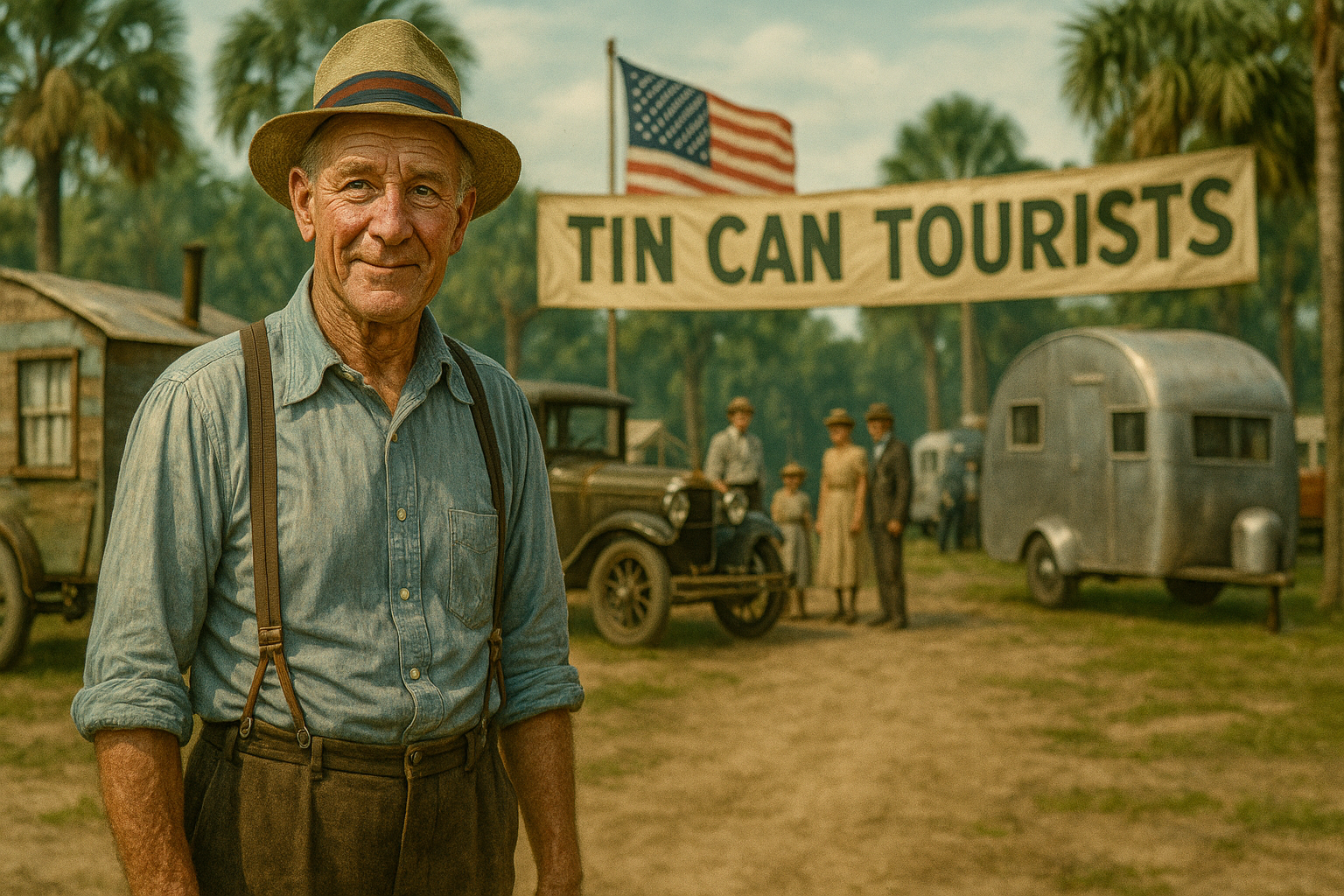
Before Instagram hashtags, before glossy RV commercials, there was a group of ordinary people who packed up their cars, strapped tin cans to the front bumpers, and hit the road in search of sunshine. They called themselves the Tin Can Tourists, and they built a movement that reshaped travel in Florida and across America.
In this episode, we trace the unlikely rise of the Tin Can Tourists in the early 20th century, explore how their quirky community grew into one of the first organized RV clubs, and reflect on what their story tells us about travel, freedom, and the American road. From campgrounds outside Tampa to the cultural clashes with locals, this is the story of how a bunch of scrappy road-trippers transformed not just vacations, but the way Americans imagined mobility itself.
What You’ll Learn in This Episode:
Why they were called Tin Can Tourists in the first place.
How Model T–era automobiles and makeshift camping gear kickstarted America’s first RV boom.
The surprising role Florida played in shaping the culture of long-term camping.
What tensions brewed between these early nomads and local communities.
How the Tin Can Tourists paved the way for modern RV parks, camping clubs, and today’s “van life” trend.
Why It Matters:
The Tin Can Tourists weren’t just travelers; they were innovators. They democratized leisure travel, gave birth to America’s love of the open road, and left behind a legacy that still echoes in today’s campgrounds and RV rallies. Their story is one of grit, resourcefulness, and community, a reminder that sometimes, the best adventures begin with little more than a car, a can of beans, and the open highway.
Resources & Links:
Official Tin Can Tourists Club: tincantourists.com
